IR Lamp Color Temperature & Wavelength Reference
In infrared heating technology, color temperature and wavelength are not independent data points but two sides of the same physical coin. According to Wien's displacement law, the higher the temperature of a heated body, the shorter the peak wavelength of its radiated energy.
1. IR Lamp Specifications & Glow Color Reference
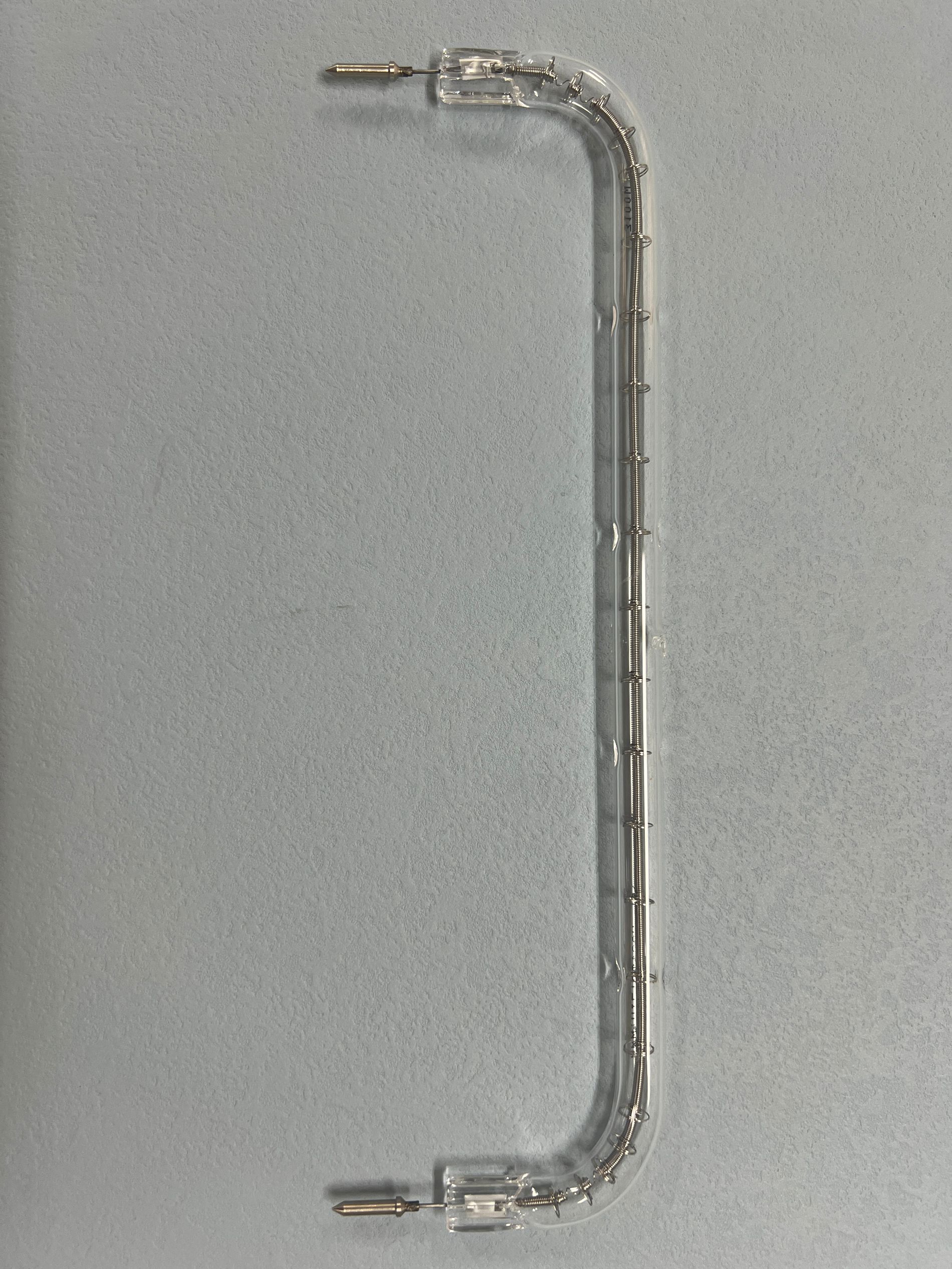
Single tube 3500 W: Filament temperature 2020 degrees C, peak wavelength 1.4 μm, bright orange-white glow, short-wave range. Twin tube single wire 4000 W: Filament temperature 1840 degrees C, peak wavelength 1.6 μm, bright orange-red glow, short-wave range. Twin tube dual wire 4500 W: Filament temperature 1610 degrees C, peak wavelength 1.8 μm, deep red/cherry-red glow, fast medium-wave range.
By observing the visible glow color, operators can make a preliminary on-site assessment of lamp operating status. Bright orange-white is characteristic of high-energy short-wave lamps; bright orange-red is the standard short-wave infrared color; deep red/cherry-red is suited for materials with high surface absorption rates.
2. Three Fundamental Physical Laws
Inverse Temperature Relationship: The lower the temperature, the longer the wavelength. As filament temperature decreases from 2020 degrees C to 1610 degrees C, the wavelength extends from 1.4 μm to 1.8 μm. Power vs. Structure Balance: Twin-tube construction delivers higher total power output, but the per-filament temperature is actually lower, extending lamp lifespan. Physical Limits of Heated Length: By varying tube diameter and circuit configuration, different heating characteristics can be precisely calibrated.
3. Application Guidance for Manufacturers
Single tube (2020 degrees C): For applications demanding maximum ramp-up speed and penetration. Twin tube dual wire (1610 degrees C): Delivers gentler thermal energy, suitable for large-area, stable thermal absorption in precision material processing.
Previous
Choosing the Right IR Heater
Next
Clear Tube, Gold-Plated & Ceramic Reflective Coating Test Analysis